
Entrepreneurship curriculum for middle school

Trying to choose entrepreneurship curriculum for middle school can leave you with a lot of tabs open and no clear starting point. I would begin with your students and your calendar. How much time do you actually have? What can students already do? What should they be able to create by the end? A useful course connects those answers. It gives each lesson a reason to be there, so students can see how today’s work moves their idea forward.
Connect the Course to One Idea
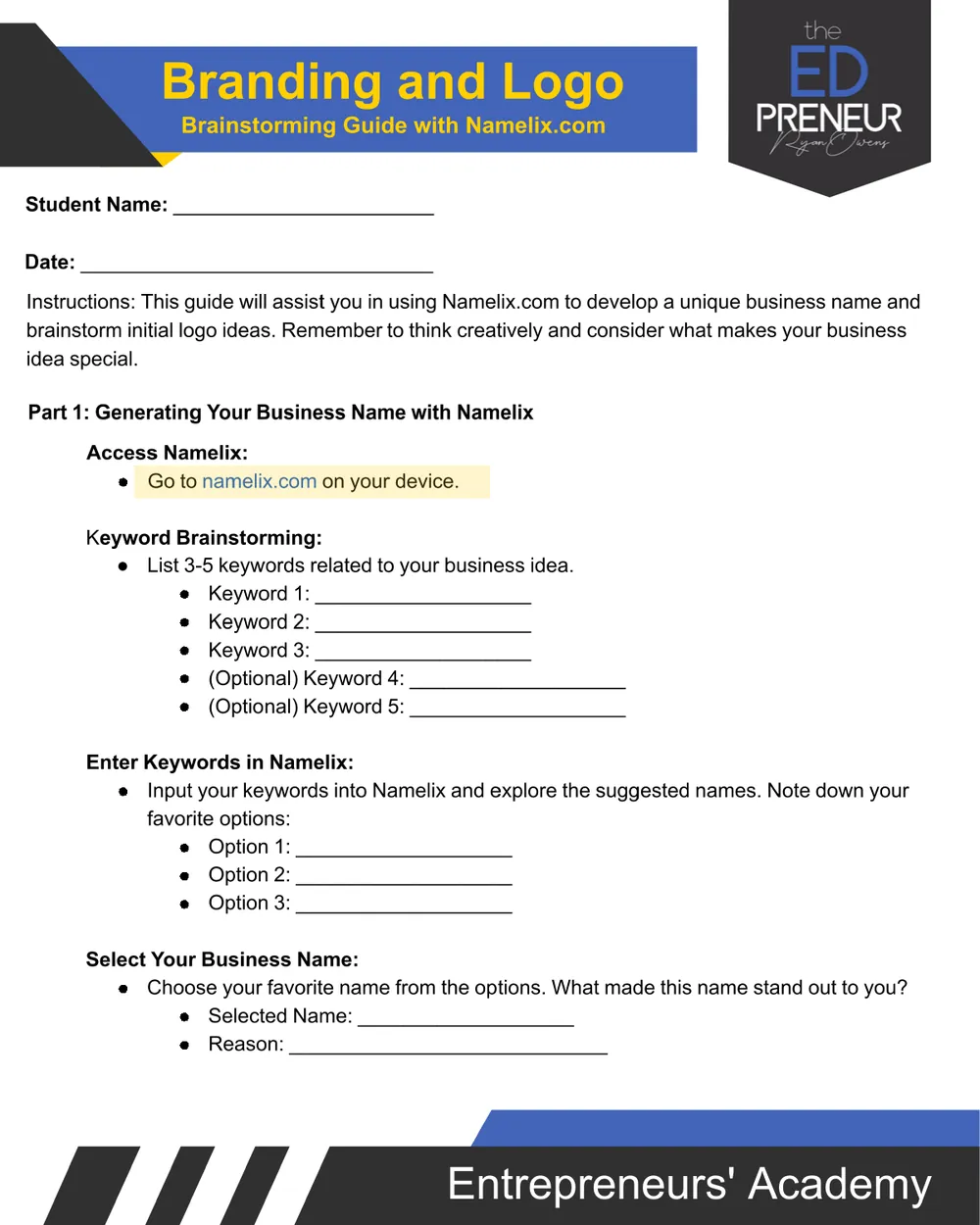

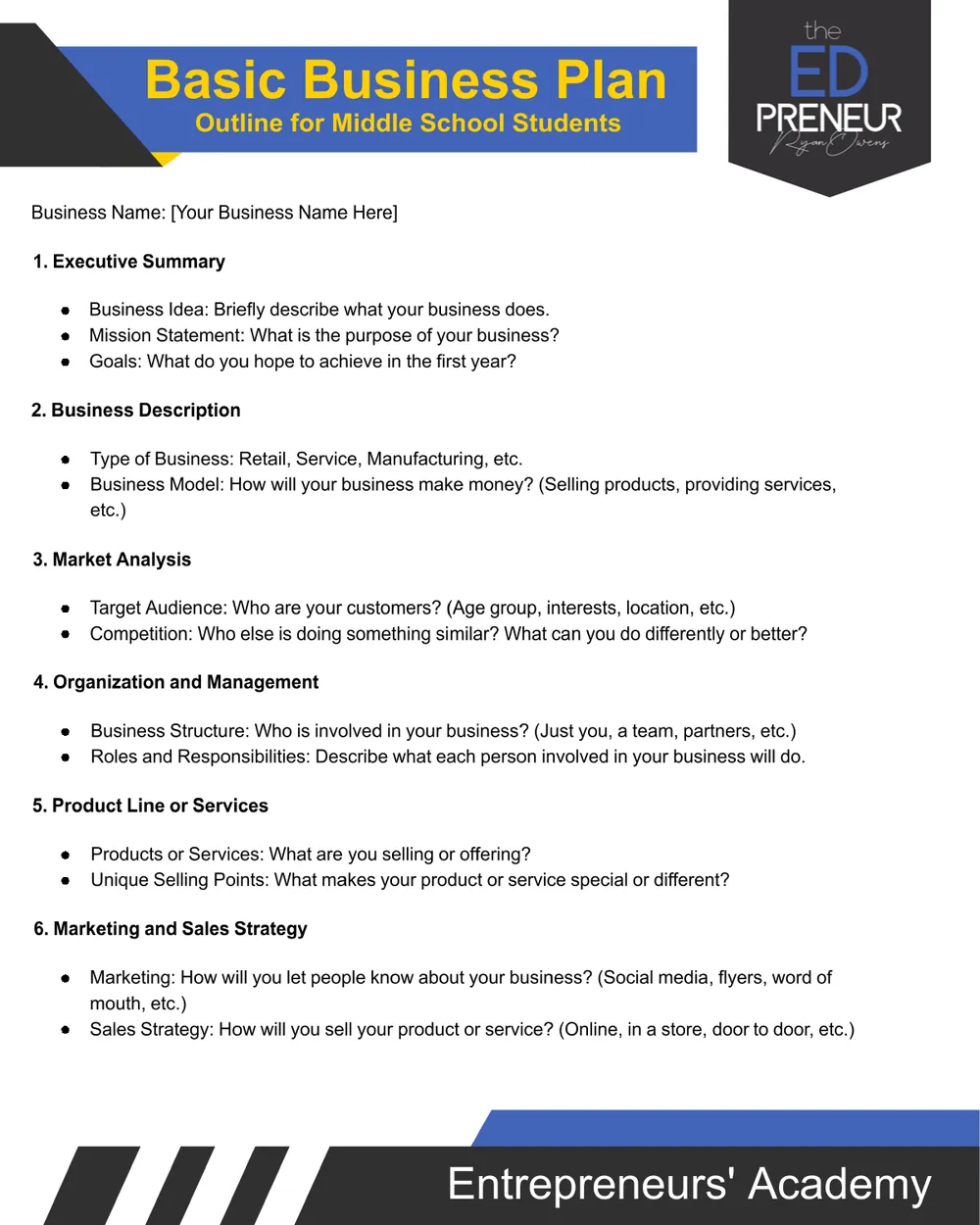
Choose a final task before planning every lesson. Students might finish with a business plan and a short pitch. Once that’s clear, you can work backward to the decisions they need to make along the way.
Begin with problems students recognize. A missing service at school, a frustrating product, or an everyday inconvenience can give them something to discuss. They don’t need a world-changing invention to practice entrepreneurial thinking.
Next, introduce the customer. Ask who has the problem, what they do about it now, and what might make them try something different. Students can then connect their idea to someone more specific than “everybody.”
Build the money lessons around that same business idea. Students can estimate a cost, choose a price, and explain what the difference means. Later, they can revisit the numbers when they change the product or the audience. Reusing the idea helps the course feel connected.
Make room for marketing after the customer is clear. A logo can be a useful design task, but ask students what it should communicate. Have them explain why the message and format fit the person they want to reach.
Your calendar needs room for feedback, too. A course labeled nine weeks still has to fit your class periods, interruptions, and student pace. Look at the actual lessons and decide where students may need another example or another day.
I would use small checkpoints instead of waiting for one large final grade. A brief customer description, a simple cost explanation, and a draft pitch can show you where help is needed.
Give students a chance to revise before presenting. Changing a weak idea after useful feedback is progress. It shouldn’t feel like starting over.
Compare the courses and bundles below. Choose the sequence that fits your class, then plan the first week in detail. You can adjust the next step as you learn what your students need.
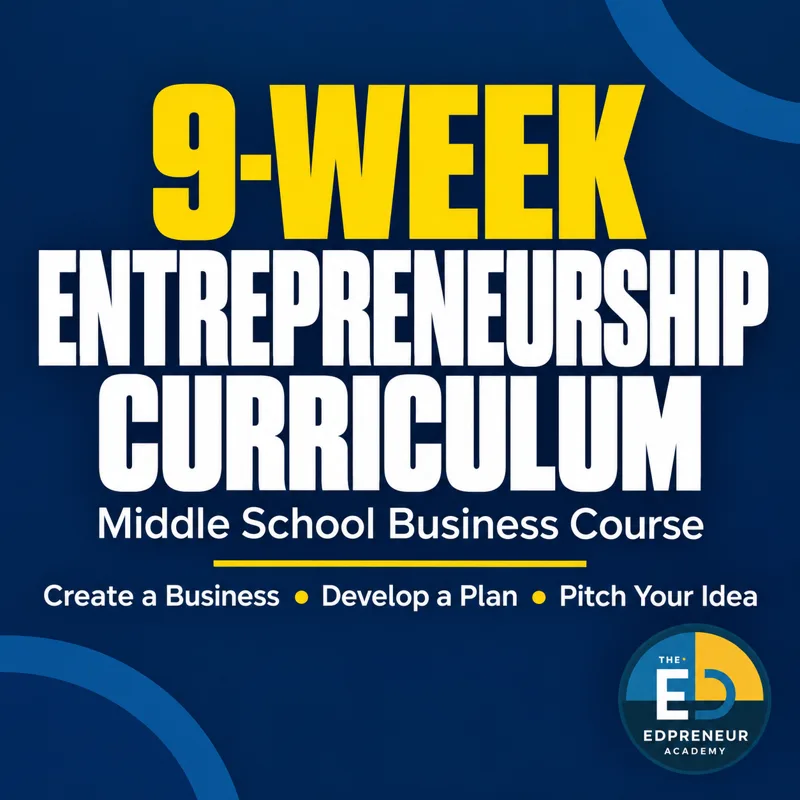
Entrepreneurship Curriculum | 9-Week Middle School Business Course
Grades: 6th-8th
- Business
- Economics
List price: $27.47
5 · 5 reviews
View on TpT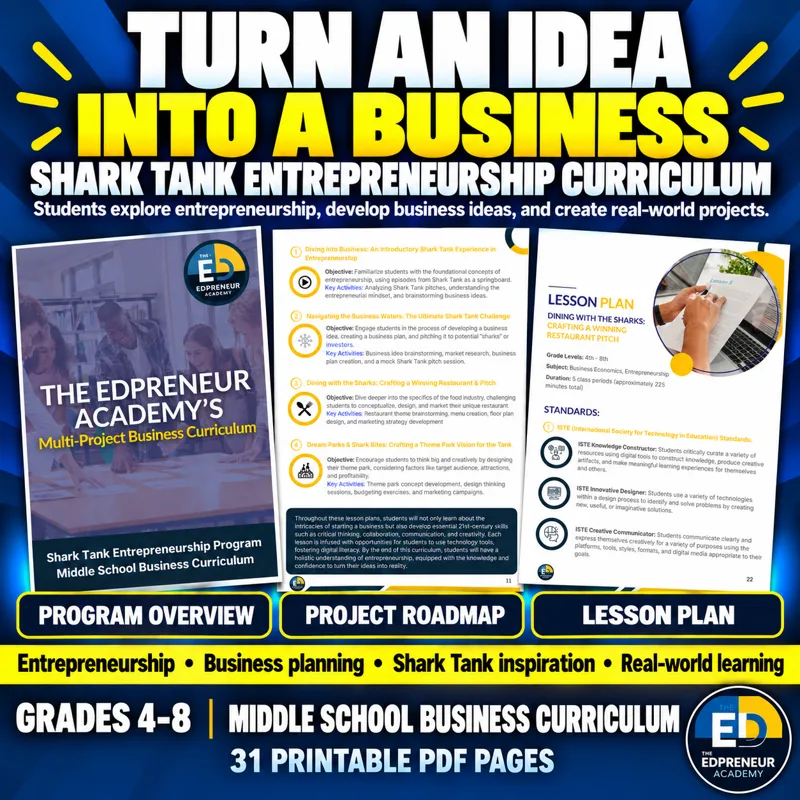
Shark Tank-Style Entrepreneurship Curriculum | Middle School Business Lessons
Grades: 4th-9th
- Business
- Economics
List price: $11.50
4.75 · 8 reviews
View on TpT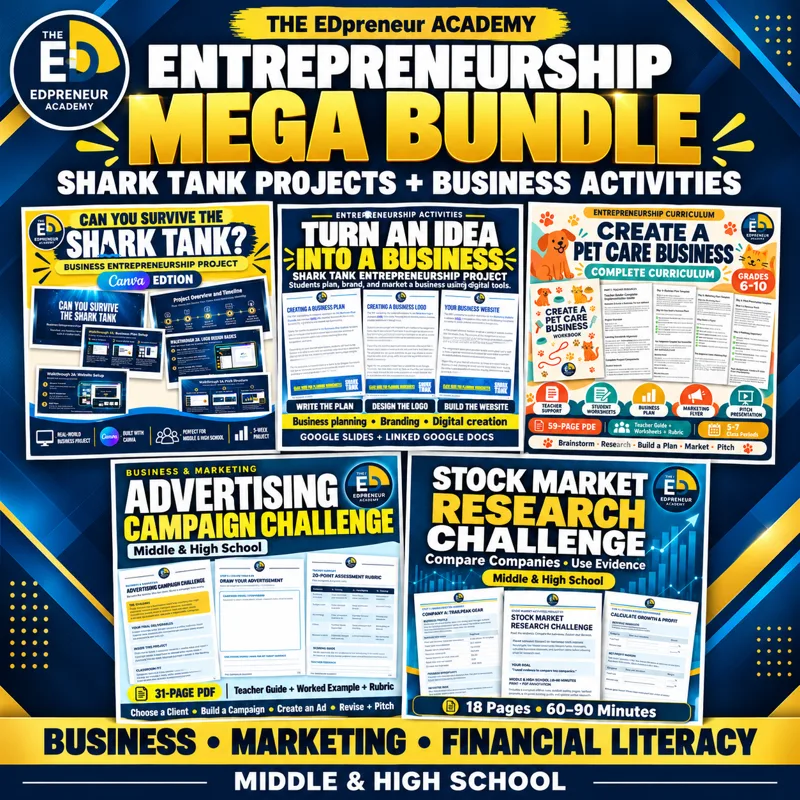
Entrepreneurship Curriculum Bundle | Shark Tank-Style Projects & Activities
Grades: 4th-12th
- Business
- Economics
- Financial Literacy
List price: $496.29
4.75 · 4 reviews
View on TpT