
Design a Theme Park Project for Students (PBL)

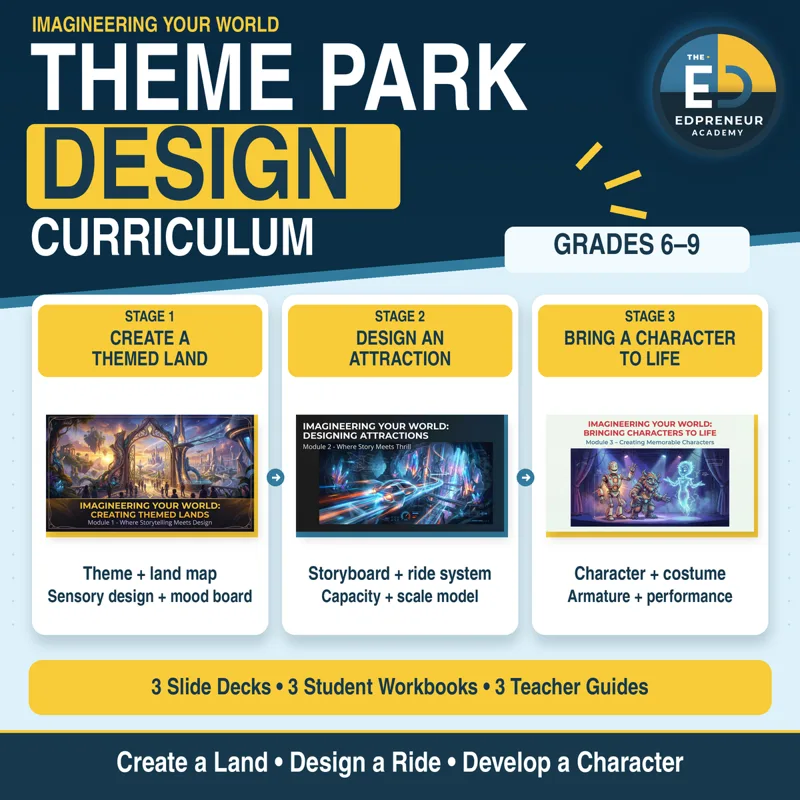
Want students to design a theme park project that has room for creativity without turning into a pile of unrelated ideas? I would start with one themed land. Students can build the attraction, character, and story around the same guest experience. That gives the project a center. It also gives you a useful question to ask as the work grows: how does this choice fit the world you’re creating?
Give the Park a Shared Story
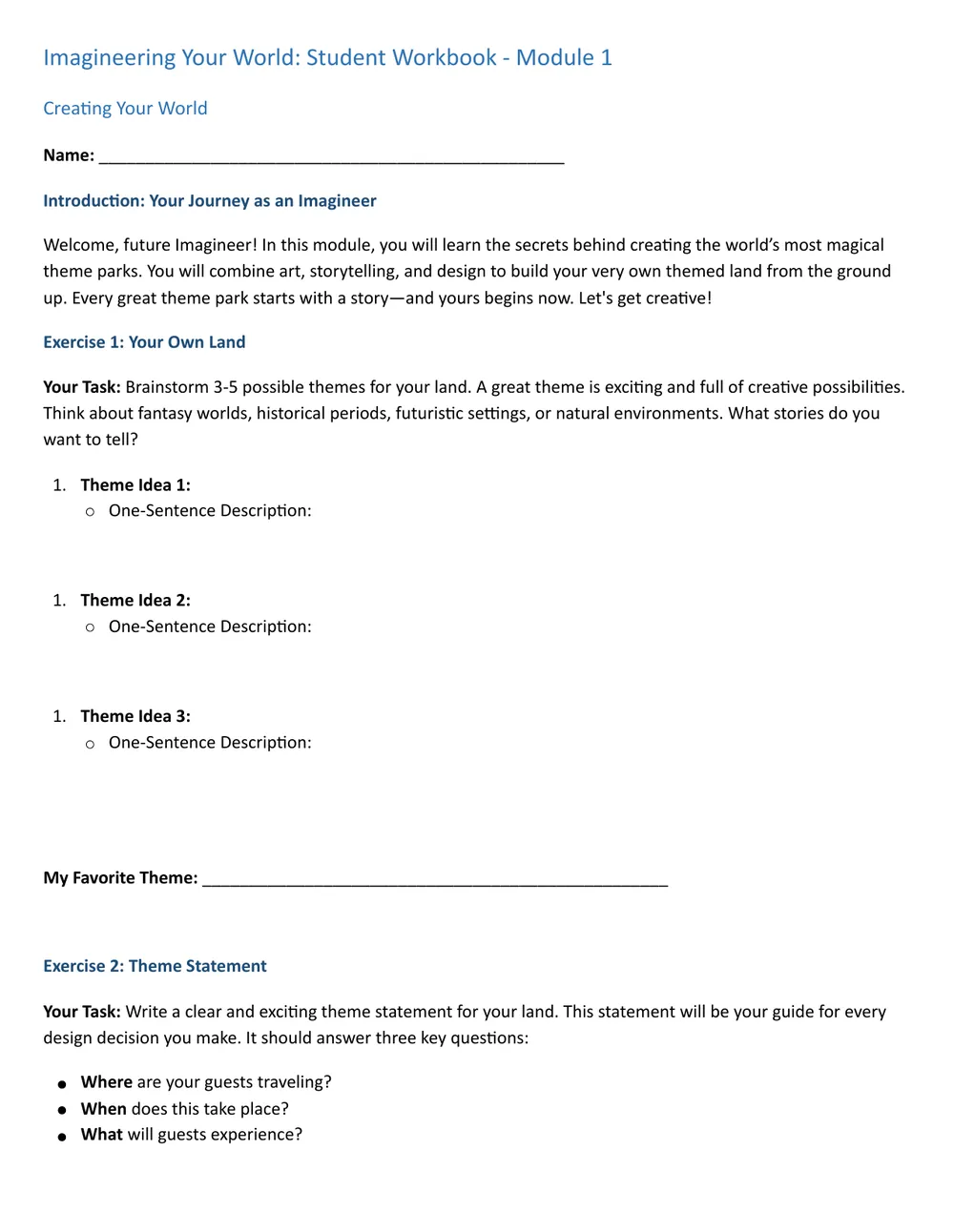
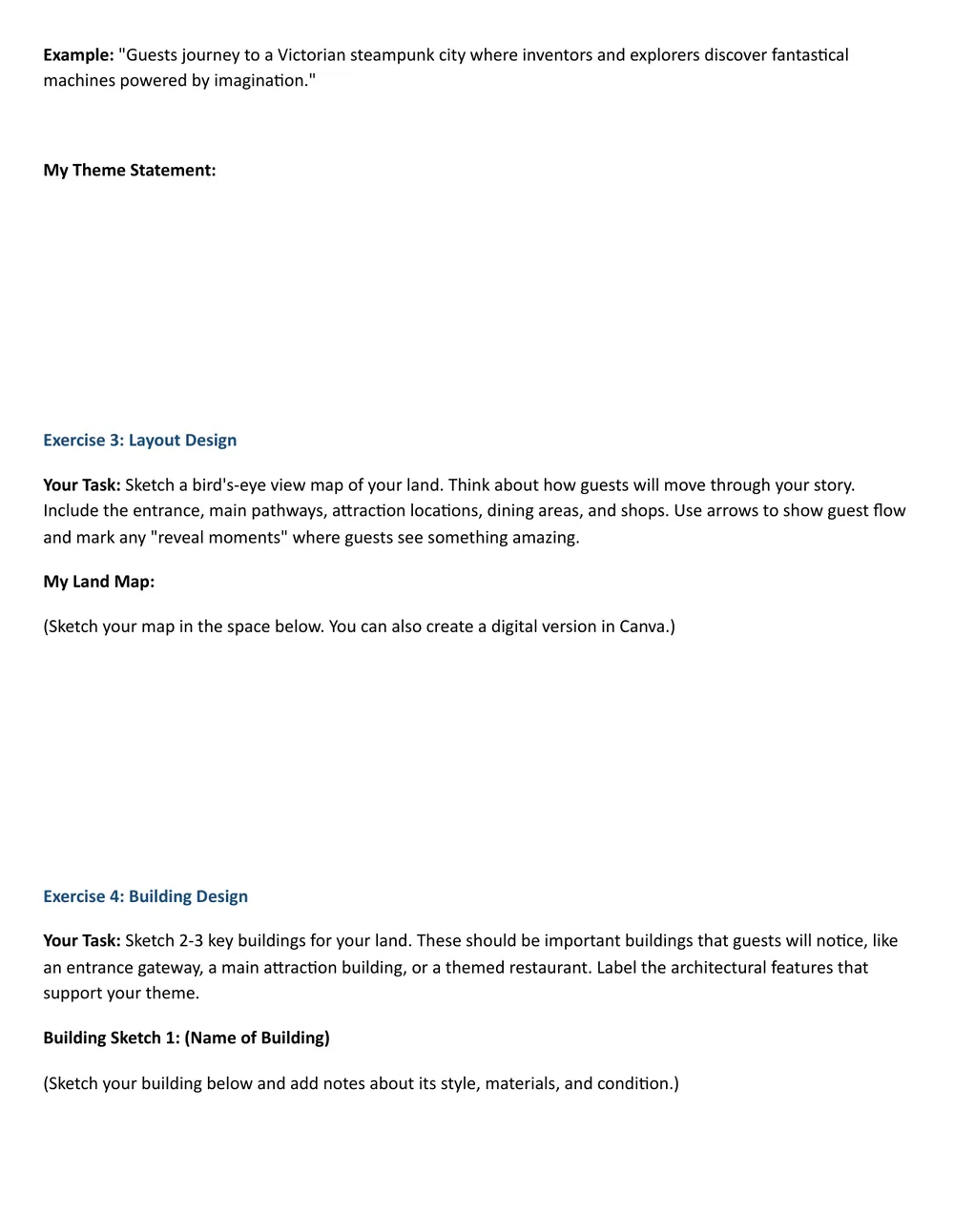
Before students draw a ride, have them describe the land in a few sentences. Where are guests going? What kind of place is it? What should they notice or feel when they arrive? Keep the description simple enough that another group can understand it.
Next, ask who the land is designed for. A space for younger children will need different choices than an attraction for older thrill seekers. Students should consider that audience as they plan the experience.
Have students develop one attraction that belongs in the land. They can explain what guests do, how the attraction begins, and what happens at the end. A storyboard can help them show a sequence instead of only drawing a machine.
Then introduce an original character. Ask what role the character has in the story. Is it a guide, a problem solver, or someone who needs help? The character should contribute to the experience rather than simply decorate the poster.
Choose a math or engineering connection that fits your course. Students could use a scale for a simple layout, compare a few design costs, or describe how a model represents the idea. Set the limits before they begin building so the project stays manageable.
I would plan one review before the final model or presentation. Let another group describe what they think the land is about. If their explanation doesn’t match the designers’ intention, that gives students a useful reason to revise.
Make the grading expectations clear. Separate the quality of the explanation from the neatness of the artwork. A student who isn’t confident drawing should still be able to show strong planning and reasoning.
Finish with a short presentation that connects the land, attraction, and character. Ask students to explain one change they made and why.
Take a look at the theme park project below, then choose the design work your students are ready to tackle.
Theme Park Project | Project Based Learning | Design a Land, Ride & Character
Grades: 5th-10th
- Computer Science - Technology
- Creative Writing
- Graphic Arts
List price: $8.97
5 · 1 review
View on TpT